
At a glance
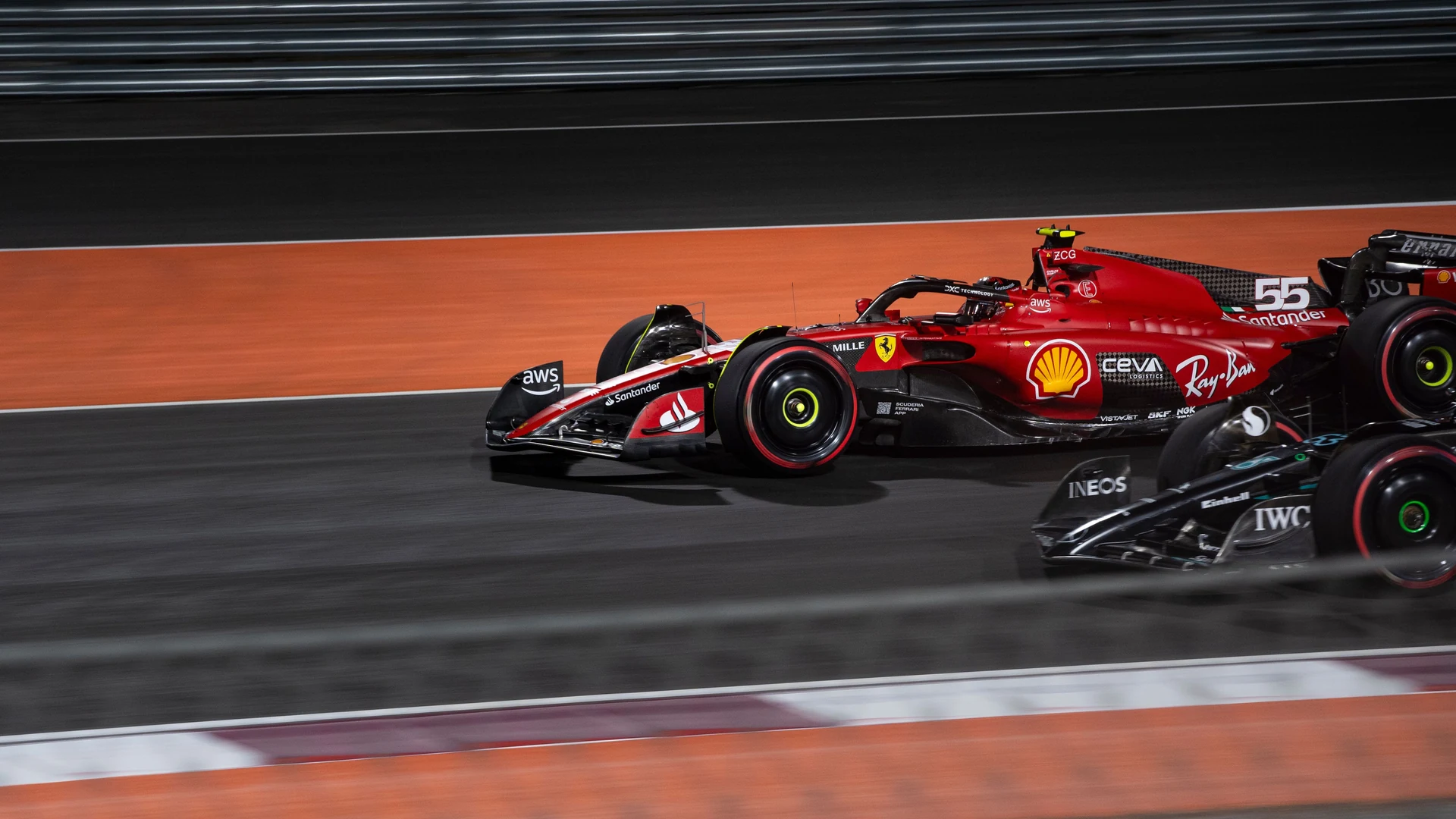
The Qatar Grand Prix is a fast, floodlit race at Lusail International Circuit, a venue whose identity was established by motorcycles long before Formula 1 arrived. Its first championship Grand Prix came in 2021; after a year away, it returned in 2023. Four editions through the end of 2025 produced a small but unusually concentrated collection of championship moments. F1’s original announcement.
Lewis Hamilton won the opening race. Max Verstappen then won the next three Grands Prix, although the Saturday honours told another story: Oscar Piastri won the Qatar Sprint in 2023, 2024 and 2025. Separating those two competitions makes the record much easier to follow. A driver can dominate one part of this weekend without taking home Sunday’s biggest prize. 2025 classification.
For a first-time spectator, the most revealing feature is the sustained cornering. Lusail asks drivers to join one fast change of direction to the next, rather than build a lap around repeated slow corners. That flowing shape helps explain why tyres, physical effort and the timing of pit stops have become such prominent characters in its short Formula 1 history. F1’s circuit assessment.
Origins
Lusail opened its international Grand Prix chapter on 2 October 2004 with Qatar’s first MotoGP meeting, won by Sete Gibernau. MotoGP’s own circuit history records construction taking a little over a year. This was a purpose-built racing venue outside Doha, with a flowing layout and artificial grass around the track intended to limit the movement of sand from its surroundings. MotoGP’s circuit history.
Permanent floodlighting enabled Qatar to stage MotoGP’s first night race in 2008. Formula 1 therefore inherited an established night-racing setting when it arrived thirteen years later. The lights are more than a dramatic backdrop in that sequence: they connect the circuit’s motorcycle beginnings with the appearance familiar to modern Grand Prix viewers. The floodlit beginnings.
Formula 1 announced the 2021 event on 30 September, for a race weekend on 19–21 November. That short lead time matters. Qatar first entered as an addition to a revised season calendar, while an accompanying ten-year arrangement was due to begin in 2023. Discussions about the longer-term venue were still continuing when the agreement was announced, leaving the next stage of Qatar’s Formula 1 development to take shape after that opening commitment. The 2021 agreement.
The first visit and the later return consequently belong to different stages of the story. The 2021 race demonstrated that the existing venue could host Formula 1. The 2023 return followed substantial work on the facilities and racing surface. Looking at them together reveals an event changing from a rapid calendar addition into a regular championship destination. The infrastructure programme.
How the circuit has changed
Lusail’s essential attraction survived its conversion into a regular Formula 1 venue: the long main straight feeding a lap dominated by linked medium- and high-speed bends. For the 2025 Grand Prix, Formula 1 listed a length of 5.419 kilometres and a distance of 57 laps. F1’s 2025 event details.
The return in 2023 involved a complete resurfacing and modified kerbs, alongside a new pit building and paddock infrastructure. Pirelli warned beforehand that information gathered in 2021 would therefore be of limited value. A track can keep its recognisable outline while changing the practical questions facing engineers: the surface, kerbs and a different generation of car all influence how confidently a previous setup can be reused. The resurfacing explained.
The 2023 weekend then exposed a specific tyre concern. Examinations found separation within the sidewall, and the FIA and Pirelli considered repeated contact with the circuit’s pyramid kerbs a likely cause. Track limits were adjusted at Turns 12–13 and drivers received a short familiarisation session. Before Sunday, the final safety measure became an 18-lap maximum total life for each tyre set, including relevant previous use. FIA’s final tyre directive.
That distinction is useful when watching the race again. The final statement did not directly order three stops. Instead, dividing a full 57-lap race into tyre lives no longer than 18 laps made at least three changes necessary. Existing mileage also mattered, so a used set could not automatically provide another complete 18-lap stint. The pit wall had to account for the life left in individual sets. How the limit worked.
By its November 2025 announcement, Pirelli said modifications to the pyramid kerbs and the addition of gravel strips had prevented a repeat of that earlier sidewall issue in 2024. The new 25-lap restriction for 2025 addressed a different finding: wear levels and structural fatigue in tyres examined after the previous year. Similar-looking interventions can have different technical causes, even at the same circuit. Pirelli’s 2025 explanation.
The 2023 heat was a separate safety question. On 9 October the FIA acknowledged that extreme temperature and humidity had affected drivers’ wellbeing and announced an analysis of possible responses, including cockpit airflow and calendar considerations. That was the governing body’s stated response after the race. It should be understood alongside the tyre directive, rather than treating heat as the technical reason for the 18-lap limit. FIA’s climatic-conditions statement.
Great races and moments
The 2021 debut put Qatar directly into a close drivers’ championship. Hamilton took pole with a lap of 1:20.827, while the qualifying session ended with Pierre Gasly suffering front-wing damage and a puncture. It was a vivid first demonstration of the speed and commitment the new Formula 1 venue demanded, even before Sunday added another layer of consequences. The first qualifying session.
Verstappen received a five-place grid penalty for failing to respect double yellow flags, leaving him seventh at the start. Hamilton controlled the race from pole, while Verstappen recovered to second. Fernando Alonso completed the podium for Alpine, his first top-three finish since Hungary in 2014. The winner’s dominance and Alonso’s long-awaited celebration gave the inaugural race two quite different emotional centres. The inaugural race report.
Hamilton’s winning margin was 25.743 seconds, but the championship effect was tighter than that gap suggests: Verstappen remained eight points ahead after taking the fastest-lap bonus. Qatar had brought the rivals closer with two rounds remaining. For viewers following the title, the race’s importance lay as much in the altered points balance as in the battle for first place on the evening itself. The title-race consequences.
The defining Saturday arrived on 7 October 2023. Piastri started the Sprint from pole on medium tyres, lost the lead to George Russell’s soft-shod Mercedes, then recovered it as the differing tyre choices developed. Verstappen finished second and secured his third drivers’ crown, while Norris completed the top three. A rookie’s breakthrough Sprint victory and a champion’s title celebration shared one finish line. The title-winning Sprint.
Verstappen’s 2023 title had also been settled by what happened elsewhere in the Sprint. Perez, his remaining mathematical challenger, retired following contact with Ocon and Hulkenberg. Verstappen still completed his own race in second, between the two McLarens. The championship celebration and the contest for the Sprint win were therefore related without being identical: Piastri won the race he was driving, while Verstappen achieved the larger objective that brought Qatar into the title’s history. How the championship was settled.
Sunday produced a different kind of intensity. Hamilton and Russell made contact at the first corner; Hamilton retired, while Russell continued and eventually finished fourth. Verstappen won ahead of Piastri and Norris. With the tyre-life limit driving frequent stops, positions on the road needed to be read alongside each driver’s remaining obligations. A car ahead could still owe another visit to the pit lane. FIA’s 2023 race account.
In 2024 the Grand Prix contained three Safety Car periods, and Norris’s challenge was undone by a ten-second stop-and-go penalty for failing to slow under yellow flags. Verstappen won from Charles Leclerc and Piastri; Norris recovered to tenth. The result illustrates another side of Lusail: speed alone offers little protection when a neutralisation or an infringement changes the order. The eventful 2024 Grand Prix.
One small object made the 2024 race especially complicated: a mirror from Albon’s Williams landed on the main straight. Yellow flags were shown; Bottas subsequently ran over the mirror, scattering debris, and Hamilton and Sainz suffered punctures around the same phase. The Safety Car and the investigation of Norris then changed several contests together. It is a useful race to watch beyond the leader, because one incident sent consequences through the field. The mirror and its consequences.
The 2025 race turned on an early Safety Car following contact between Nico Hulkenberg and Gasly. Verstappen pitted while the McLarens stayed out. With the 25-lap allowance shaping the remaining stints, Red Bull’s decision set up a winning route through the race. Piastri finished second, Carlos Sainz took third for Williams and Norris was fourth after passing Kimi Antonelli near the finish. The 2025 strategic turning point.
McLaren had the speed to lead, yet the different pit-stop schedules proved decisive. The episode is worth following through the gaps and stops, rather than just the changing leader graphic: a lead gained by postponing a stop is not necessarily a lasting advantage. Qatar sent all three title contenders to the final round still in contention, a striking contrast with the championship already settled here on Saturday in 2023. The teams’ 2025 accounts.
The British story in Qatar
Hamilton set the first British benchmark at Lusail before the inaugural Grand Prix had even begun. His pole performance made him the only driver below 1:21 in that qualifying session. The subsequent victory established a particularly clear opening chapter for British visitors: Qatar’s first Formula 1 winner was a British driver in a Mercedes, converting Saturday speed into Sunday control. Hamilton’s debut pole.
Norris’s 2021 result offered the opposite feeling. He finished ninth after a late pit stop, while Russell was classified seventeenth for Williams. The official finishing order preserves the more difficult weekends as well as the winning one. They help put later performances into perspective: familiar names did not all arrive at Lusail already fighting for the same positions they would occupy in subsequent seasons. The complete 2021 result.
The Mercedes collision in 2023 left Hamilton out almost immediately, while Russell’s recovery to fourth made the same incident the beginning of a much longer race for his team-mate. Norris stood on Sunday’s podium behind Piastri. British interest therefore ran through several different stories at once: an early retirement, a recovery drive and McLaren’s growing competitiveness. The 2023 finishing order.
Norris then led almost all of the 2024 Sprint before allowing Piastri through just before the flag, returning the favour after their earlier swap in São Paulo. Russell finished third, only 0.410 seconds behind the winner. That narrow group at the line made teamwork visible in a way a simple results table cannot fully convey: McLaren controlled the order with a Mercedes still close enough to make the decision delicate. The late Sprint exchange.
A year later, Russell finished second and Norris third in the Sprint as Piastri won again. On Sunday, Norris’s fourth place meant the championship remained unresolved going into Abu Dhabi. Across these appearances, Qatar became a place where British supporters could see both the immediate contest between cars and the wider arithmetic of a title campaign unfolding in the same evening. The 2025 Sprint result.
The broader field also supplied a memorable 2024 result. Zhou Guanyu finished eighth for Kick Sauber, with Bottas eleventh, while Gasly brought Alpine home fifth ahead of Sainz. Those positions show why the race mattered below the podium. A points finish could carry significance for a team enduring a difficult season, even while the television’s main story followed Verstappen, Norris and the leading constructors. Points throughout the 2024 field.
Records and numbers
These event totals are fixed at the end of the 2025 season. Qatar had staged four World Championship Grands Prix: 2021, 2023, 2024 and 2025. Hamilton won once and Verstappen three times, so Red Bull led the constructor victory count with three against Mercedes’ one. Each winning driver completed 57 laps in those four editions. The results archive.
The Saturday record belonged to Piastri, winner of all three Qatar Sprints held through 2025. His routes to those wins differed: a tyre-strategy contest in 2023, a late exchange with Norris in 2024 and a win from pole ahead of Russell in 2025. Grouping them by result is useful; watching how each result happened is more revealing. Piastri’s third Qatar Sprint win.
The clearest technical numbers are 18 and 25: the maximum tyre-set lives used for the 2023 and 2025 weekends respectively. They were event-specific safety limits with different stated causes. The larger 2025 figure permitted a two-stop full-distance strategy, whereas the 2023 limit required at least three changes. Those numbers explain strategy rather than predicting the character of every future Qatar race. The later tyre prescription.
A timeline
- 2004: Qatar stages its first MotoGP event at the new circuit, beginning the venue’s international Grand Prix story.
- 2008: Permanent lighting enables MotoGP’s first night race, establishing the visual identity later inherited by Formula 1.
- 2021: Formula 1 arrives at short notice; Hamilton wins the inaugural championship Qatar Grand Prix.
- 2022: Qatar has no Formula 1 round between the debut and the start of the longer agreement.
- 2023: The resurfaced venue returns with new infrastructure; Piastri wins the Sprint, Verstappen seals the title and wins Sunday’s race.
- 2024: Piastri takes another Sprint victory; Verstappen wins an incident-filled Grand Prix ahead of Leclerc.
- 2025: Piastri completes a third successive Qatar Sprint win, while Verstappen wins the Grand Prix after the pivotal early Safety Car.
The sequence is short enough to follow race by race. Begin with the bike circuit and its lights, then the rapid Formula 1 debut, before looking at the upgraded venue and the problems encountered under racing conditions. The result is a history of adaptation as well as a list of winners. F1’s account of the return.
See it for yourself
Use the Qatar Grand Prix visitor guide to turn that history into a practical first visit. When choosing what you most want to see, think about the circuit’s two contrasting experiences: cars arriving together at the first corner after the main straight, and their sustained speed through the linked bends elsewhere around the lap. The appeal depends on whether you enjoy the immediate contest or the sight of a car working at speed.
Rewatching a short selection beforehand makes the racing easier to read from a grandstand. Hamilton’s 2021 start shows why track position mattered; the 2023 Sprint makes tyre choices visible; the 2025 Grand Prix rewards following pit-stop timing. Keep the results beside the replay and pause when the leaders stop. The apparent order and the effective order can tell different stories.
For the rest of the weekend, pair the visitor page with our F1 Sprint weekend guide, grandstand or general admission comparison and first race weekend kit. In 2025, the official support programme included Formula 2 and Porsche Carrera Cup Middle East, adding different cars and races to the same setting. That historical programme shows why it is rewarding to look beyond the Grand Prix start time. The 2025 support timetable.
FAQs
When did the Qatar Grand Prix join Formula 1?
The first World Championship Qatar Grand Prix took place on 21 November 2021, won by Lewis Hamilton. Qatar did not hold a Formula 1 round in 2022; the race returned in 2023 as the longer agreement began. The circuit already had a substantial motorcycle racing history before Formula 1 arrived.
Did Verstappen win the 2023 title in the Grand Prix?
Max Verstappen secured his third drivers’ championship during Saturday’s Sprint, finishing second behind Oscar Piastri. The separate Qatar Grand Prix took place on Sunday and was won by Verstappen. Piastri’s Saturday success was a Sprint victory rather than his first Grand Prix win.
Why did the 2023 race need so many pit stops?
The FIA and Pirelli imposed a maximum total tyre life of 18 laps per set after examinations found sidewall separation. Completing the full 57-lap race therefore required at least three tyre changes. The final directive limited tyre life; three stops were its practical consequence rather than a separate direct requirement.
Was the tyre restriction the same in 2025?
No. The 2025 allowance was 25 laps per set, counted across relevant sessions. Pirelli linked it to wear and structural fatigue found after the 2024 event, explaining that the earlier kerb-related problem had been addressed. A full-distance Grand Prix consequently required at least two tyre changes.
Which Qatar race should a first-time visitor watch?
Start with the 2021 Grand Prix for Hamilton’s controlled victory and Alonso’s return to the podium. Add the 2023 Sprint for Piastri’s win and Verstappen’s title, then the 2025 Grand Prix for the way a Safety Car and tyre limits transformed the strategy. Together they explain several sides of Lusail.
Sources
- Confirmed: Formula 1 — Qatar joins the 2021 calendar and agrees a ten-year deal from 2023 (30 September 2021)
- Confirmed: MotoGP — Lusail International Circuit history and 2025 Qatar event profile
- Confirmed: Formula 1 — Hamilton takes pole at the inaugural Qatar Grand Prix (20 November 2021)
- Confirmed: Formula 1 — Hamilton wins the inaugural Qatar Grand Prix; Alonso returns to the podium (21 November 2021)
- Confirmed: Formula 1 official results — 2021 Qatar Grand Prix
- Confirmed: Formula 1 — F1 Commission circuit and infrastructure changes for 2023 (21 February 2023)
- Confirmed: Formula 1 / Pirelli — 2023 Qatar tyre preview and circuit changes (5 October 2023)
- Confirmed: Formula 1 — Piastri wins the Qatar Sprint as Verstappen secures his third title (7 October 2023)
- Confirmed: FIA — Verstappen wins in Qatar ahead of the McLarens as Mercedes drivers collide (8 October 2023)
- Confirmed: Formula 1 official results — 2023 Qatar Grand Prix
- Confirmed: FIA — Treatment of tyres for the 2023 Qatar Grand Prix, final update (8 October 2023)
- Confirmed: FIA — Competing in extreme climatic conditions (9 October 2023)
- Confirmed: Formula 1 — Piastri wins the Qatar Sprint after Norris’s late exchange (30 November 2024)
- Confirmed: Formula 1 — Verstappen wins the 2024 Qatar Grand Prix amid three Safety Cars (1 December 2024)
- Confirmed: Formula 1 official results — 2024 Qatar Grand Prix
- Confirmed: Pirelli — A maximum of 25 laps per tyre set in Qatar (17 November 2025)
- Confirmed: Formula 1 — Piastri wins the 2025 Qatar Sprint ahead of Russell and Norris (29 November 2025)
- Confirmed: Formula 1 — Verstappen wins Qatar as the title battle goes to Abu Dhabi (30 November 2025)
- Confirmed: Formula 1 official results — 2025 Qatar Grand Prix
- Confirmed: Formula 1 — What the teams said after the 2025 Qatar Grand Prix (30 November 2025)
- Confirmed: Formula 1 — Qatar destination guide and account of the circuit’s return
- Confirmed: Formula 1 — 2025 Qatar Grand Prix full timetable and circuit distance