
At a glance
The Turkish Grand Prix made a modern circuit memorable remarkably quickly. Istanbul Park brought a long, demanding left-hand corner into Formula 1; Felipe Massa made the venue his own; and Lewis Hamilton secured his seventh world title here in 2020. Its history is compact enough to follow race by race, with changing grip and tyre behaviour connecting several of the biggest stories. Massa’s account · 2020 race report
The first championship race took place on 21 August 2005, when Kimi Räikkönen won for McLaren. Seven annual editions ran through 2011, followed by returns in 2020 and 2021. All nine championship Turkish Grands Prix held through the end of 2025 used Istanbul Park. Keeping those two periods in mind makes sense of the circuit’s unusually interrupted record. Official result · FIA preview
For a British first-timer, begin with three replays: Button’s Brawn victory in 2009, McLaren’s double podium in 2010 and Hamilton’s championship afternoon a decade later. Then watch an uninterrupted onboard lap. The results explain who succeeded; the lap explains the combination of patience, speed and precision that they had to master.
Origins
Construction began in 2003 at Akfirat, east of Istanbul, and Hermann Tilke’s circuit was ready in August 2005. Formula 1’s venue account records a 5.338-kilometre lap. This was a new, purpose-built home for a new championship event, with the inauguration and first Grand Prix following closely together. The starting point is therefore unusually clear: Turkey’s F1 story began with this particular piece of ground. Circuit guide
A new venue has to give drivers a reason to remember it. Istanbul Park achieved that through its changes of height and the relationship between its corners. The opening left drops away, while the back straight includes an uphill sweep. A lap moves through different demands, so a car’s strengths in one place may become compromises elsewhere. That variety helped the track establish an identity immediately. F1 retrospective
The first race supplied a recognisable sporting hierarchy. Räikkönen’s McLaren finished ahead of Fernando Alonso’s Renault and Juan Pablo Montoya’s second McLaren. Jenson Button was fifth for BAR Honda, while David Coulthard scored seventh for Red Bull. Those names place the debut within its period: the circuit’s beginning belonged to the championship contest and teams of 2005, even though the venue itself was brand new. Official result
Read the early results with attention to the machinery as well as the drivers. Massa appeared for Sauber at the inaugural race, then won for Ferrari the following year. The change turns a simple sequence of names into a story about opportunity. The same driver returned with a different team and was able to convert his confidence in the layout into a victory. Official result · Official result
The seven-race opening run also makes a useful introduction to recent F1 history. Ferrari’s three consecutive wins were followed by Brawn, McLaren and Red Bull successes. A venue with a short archive can show several distinct competitive eras. Watching them in order lets you see changing cars and team fortunes against a broadly recognisable circuit, without needing to learn a new map for each chapter. Official result · Official result · Official result · Official result · Official result
How the circuit has changed
The most consequential change in this story was the surface. The FIA’s 2021 preview describes newly laid asphalt dominating the slippery 2020 weekend, followed by water-blasting to improve grip for the return eleven months later. It also records additional double-kerb elements at the exits of Turns 1, 5 and 14. These details show how strongly a familiar layout can change through the condition of the road beneath the tyres. FIA preview
Turn 8 remains the signature feature: a fast, extended left-hander with several linked apexes. F1’s technical account gives its length as 640 metres and explains the sustained lateral load and work imposed on the right-front tyre. The important idea is continuity. An untidy entry can affect the following parts of the curve, then the speed carried away from it. A driver has to think beyond the first visible target. Turn 8 explained
That makes the corner rewarding to study from a fixed camera. Watch how the car settles, where it approaches the inside edge and whether the steering is corrected halfway through. A small adjustment can reveal a loss of confidence or balance even when the driver completes the corner. The television picture is often most informative when several cars pass through the same shot consecutively.
The whole circuit runs anti-clockwise and rises and falls across the terrain. Ahead of the 2020 return, drivers such as Daniil Kvyat and Pierre Gasly described preparing for a venue where they had no previous racing experience. Their comments are a reminder that an old circuit can be new to much of a field. Familiar television images do not provide every competitor with the same bank of practical knowledge. Driver preparation
The return also brought different generations of machinery together in the archive. F1’s 2020 retrospective compared the naturally aspirated V8 cars used in 2011 with the turbo-hybrid cars arriving nine years later. That comparison adds meaning to old footage: the map may look familiar while the approach speeds, aerodynamic grip and demands on the tyres have moved on. F1 retrospective
A useful numerical comparison is Hamilton’s 1:22.868 in 2021 qualifying and Montoya’s 1:24.770 race lap from 2005. These were different kinds of timed run, recorded sixteen years apart. Keep their labels attached when discussing speed. Qualifying allows a specific short-run approach, while a race lap sits within fuel, tyre and tactical decisions. The numbers become more interesting when their circumstances stay visible. Qualifying times · Fastest laps
Great races and moments
2006–08: Massa makes a speciality
Massa’s first F1 victory came in Turkey in 2006, beginning a sequence of three wins and three pole positions at the venue. He later recalled enjoying the quick direction changes and high-speed corners. Success here meant repeatedly getting a whole weekend right, rather than finding one fortunate route to the chequered flag. The repetition is what makes his association with Istanbul Park so strong. Massa’s account
The 2006 result contains a separate contest worth following. Alonso finished second, 5.575 seconds behind Massa, with Michael Schumacher only 0.081 seconds further back. The Ferrari victory and the Renault–Ferrari battle behind it were different stories unfolding in the same race. A replay is more rewarding if you follow both, because a driver can achieve a significant result without reaching the top step. Official result
In 2007, Massa led Räikkönen home for a Ferrari one-two, with Alonso third. The following year Hamilton split the Ferraris, finishing 3.779 seconds behind Massa and ahead of Räikkönen. Istanbul’s apparent specialist still had to solve a fresh contest each season. The names immediately behind him changed, even as the winner stayed the same. Official result · Official result
The 2008 pit record gives that final victory another dimension: Massa stopped twice, while Hamilton stopped three times. Counting cars on the road at an isolated moment would miss this difference in workload still to come. When revisiting the race, note who has another stop remaining before deciding whether an apparent lead represents control. The pit sequence helps explain why two quick cars can be racing each other on different schedules. Pit stop record
2009: Button extends Brawn’s extraordinary start
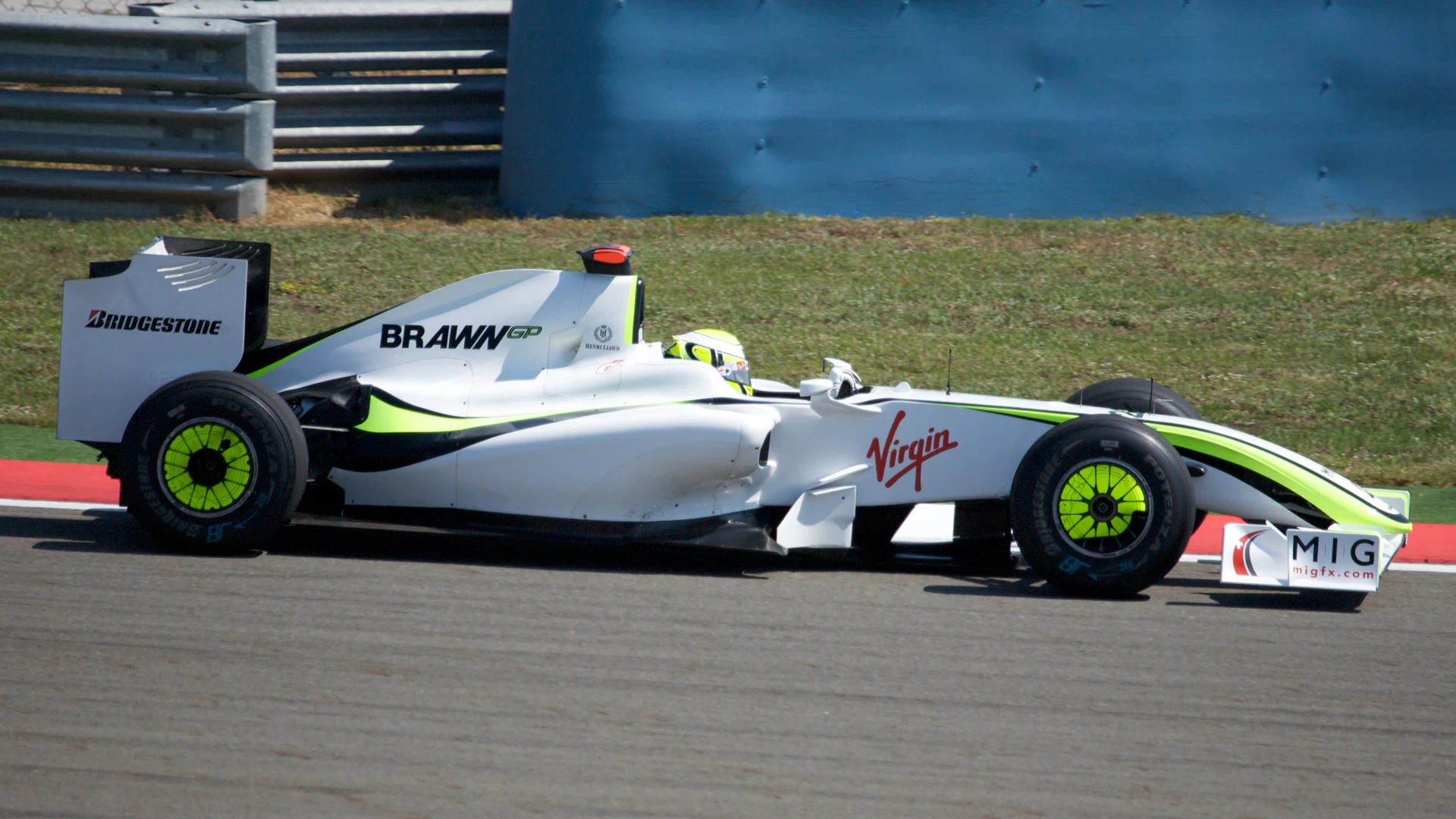
Button won ahead of Mark Webber and Sebastian Vettel, by 6.714 seconds over the first Red Bull. The season’s results make the scale of the achievement clear: Turkey was Button’s sixth victory in the opening seven rounds. It also became his final win of that championship season. Istanbul therefore marks both the height of Brawn’s early advantage and a useful dividing point in the campaign. Official result · Season results
The starting grid adds a small but significant detail: Vettel began on pole, with Button alongside. This was a race in which the eventual winner had to overturn the initial order. For a new viewer, comparing the grid with the final classification is an easy way to find a question worth investigating. Here it directs attention towards how Brawn converted a strong starting position into the leading result. Starting grid
2010: Red Bull loses its double
Webber and Vettel collided on lap 40 while disputing the lead. Vettel retired, and Webber recovered to third. The incident is central to the history of their partnership because the two drivers’ ambitions became immediately costly to their shared team. In the closing phase of an F1 race, an apparently secure position can depend on how team-mates manage a single encounter. F1 collision history
Hamilton and Button finished first and second for McLaren, separated by 2.645 seconds. That final order gives British visitors a particularly clear reason to revisit the race: two British champions sharing the top positions for the same team. Webber’s third place meant Red Bull still salvaged a podium, but the classification shows how dramatically the opportunities had changed. Official result
2011: a Red Bull answer before the pause
Vettel won the final race of Turkey’s original run, leading Webber by 8.807 seconds, with Alonso third. Hamilton and Button finished fourth and sixth. Set beside the previous year’s result, the Red Bull one-two feels especially telling. The same venue that had exposed an internal breakdown now supplied a clean leading result for both cars. The classification gives the returning team a much stronger result to set beside its previous visit. Official result
2020: Hamilton reads the changing grip
Stroll took his first F1 pole in rain-hit qualifying for Racing Point, with Hamilton sixth. The Canadian’s performance established that the usual hierarchy could be disrupted on the slippery circuit. It is worth watching Saturday before Sunday: Hamilton’s eventual dominance makes more sense once you have seen how difficult Mercedes found the short qualifying runs. Qualifying report
F1’s technical analysis explains the turnaround through tyre temperature. The Mercedes struggled to build the necessary rear-tyre heat quickly, but longer running during the race allowed its performance to emerge. Hamilton then sustained that advantage. This is a particularly accessible lesson in why the quickest car over a short session and the strongest car across a long stint may look different. Technical analysis
Hamilton won by 31.633 seconds from Sergio Pérez, with Vettel third, and secured a seventh Drivers’ World Championship. The achievement joined his name with Michael Schumacher at the existing title benchmark. A demanding wet race gave the milestone a character of its own: championship arithmetic was resolved through a carefully managed performance, with the driver still making consequential decisions as the finish approached. Official result · 2020 race report
2021: Bottas handles another damp afternoon
Bottas won from pole ahead of Max Verstappen and Pérez as intermediate tyres remained central to the race. Hamilton recovered from eleventh on the grid to fifth after a late tyre change. The two Mercedes stories make an effective comparison: one car controlled the race from the front, while the other had to weigh track position against the remaining life of its tyres. 2021 race report · Official result
The British story at Istanbul Park
Hamilton’s connection began before his first F1 season. In the 2006 GP2 sprint race he started seventh, spun down to nineteenth and recovered to second behind Andreas Zuber. The achievement is a useful opening chapter because it shows a young driver using the circuit’s passing opportunities while managing a recovery. It belongs to Istanbul’s wider racing story, with its own championship and result. GP2 archive
Button’s 2009 win rewards a different kind of attention. Read down the result and Hamilton appears thirteenth in the McLaren, more than a minute behind. Two British champions occupied very different competitive positions that afternoon. Following national favourites together can therefore reveal more about team performance than choosing a single flag to support. Official result
The 2010 McLaren one-two reversed that picture for Hamilton. He led Button home, and their shared result made the race a British success across both driver positions and the team’s entry. For a first visit, this is a useful reminder to follow the second car. Its race can establish whether a strong weekend reflects the machinery, one exceptional drive, or a combination of both. Official result
Hamilton’s 2021 qualifying run needs an accurate caption. He set the fastest time in the final session, but an engine-related penalty left him eleventh on the starting grid; Bottas occupied pole. The official qualifying sheet and grid preserve those two outcomes separately. When an old photograph or highlight calls a driver “fastest”, check which session and which starting position the caption actually describes. Qualifying times · Official grid · 2021 race report
Taken together, the British chapters cover three distinct forms of achievement: a junior recovery, a team’s exceptional season and a championship sealed through experience. They provide different things to watch from the spectator bank. Passing technique, consistent pace and judgement about the tyres are all visible, but they become clearer once you know which question a particular race is asking.
Records and numbers
These figures stop at the end of 2025 and refer to championship Turkish Grands Prix at Istanbul Park. The nine results produce six winning drivers. Massa’s three wins lead the list, Hamilton has two, and Räikkönen, Button, Vettel and Bottas have one each. Ferrari’s three victories make it the most successful constructor across this completed set. FIA preview · Official result
| Measure | Record through 2025 |
|---|---|
| Championship editions | Nine: 2005–11, 2020 and 2021. |
| Most wins by a driver | Felipe Massa, three, all for Ferrari. |
| Scheduled Grand Prix distance | 58 laps of the 5.338 km circuit. |
| Fastest race lap | Juan Pablo Montoya, 1:24.770, 2005. |
| 2021 qualifying benchmark | Lewis Hamilton, 1:22.868 in the final session. |
The lap record comes from Montoya’s lap 39 in the inaugural race and remains the benchmark listed in F1’s circuit record. Its survival is part of this venue’s character: a small number of races, changing conditions and different generations of cars produce an unusual comparison. A qualifying time measures another category of performance, so both records deserve their full description. Fastest laps · Circuit guide · Qualifying times
A timeline
- 2003 Work starts on the purpose-built circuit that will become Istanbul Park. Circuit guide
- 2005 Räikkönen wins the inaugural championship Turkish Grand Prix for McLaren. Official result
- 2006–08 Massa takes three successive victories and pole positions for Ferrari. Massa’s account
- 2009 Button’s Brawn beats both Red Bulls in his sixth win of the season. Season results
- 2010 Hamilton and Button deliver a McLaren one-two after the leading Red Bulls collide. Official result
- 2011 Vettel leads Webber home before Turkey’s absence from the following championship calendars. Official result
- 2020 The event returns, and Hamilton’s victory secures his seventh drivers’ title. 2020 race report
- 2021 Bottas wins the ninth championship Turkish Grand Prix, the last edition within this history’s cutoff. Official result
Use this sequence to select a replay, then follow a single car through the full race. The chronology gives the result its setting; the uninterrupted footage reveals how much work was needed to reach it. A short circuit history can become a surprisingly detailed introduction to the sport.
See it for yourself
Start planning with the Turkish Grand Prix visitor guide. Decide whether the appeal is watching the sustained cornering at Turn 8, following a braking-zone contest or sharing the start and finish atmosphere. These interests point towards different views. A circuit map and the access terms for the actual event are the right companions when comparing available tickets.
The guide to grandstands and general admission helps turn that preference into a practical choice. Examine the direction of the view, the amount of track visible and the screen provision shown for the event. If you are travelling with someone new to F1, a clear way to follow the running order can be as valuable as seeing one famous corner close up.
For your first overseas race, use Brits abroad alongside how a race weekend works. Leave room in the itinerary for getting to and from the venue and for finding your viewing area. Once there, compare the cars at the same point over several laps. Istanbul’s history is full of changing tyre behaviour, and sustained observation is the best way to begin noticing it.
FAQs
When was the first Turkish Grand Prix?
The first Formula 1 World Championship Turkish Grand Prix was held at Istanbul Park on 21 August 2005. Kimi Räikkönen won for McLaren ahead of Fernando Alonso and Juan Pablo Montoya.
Why is Istanbul Park’s Turn 8 famous?
It is a long, fast left-hander with several connected apexes. The sustained lateral load tests the driver and tyres, while the chosen line through the early part affects the rest of the corner and the exit.
Who has won the Turkish Grand Prix most often?
Through the end of 2025, Felipe Massa held the record with three victories, all for Ferrari in 2006, 2007 and 2008. He also took pole position in each of those three years.
Which title did Hamilton secure in Turkey?
Hamilton won the 2020 Turkish Grand Prix and secured his seventh Drivers’ World Championship, matching Michael Schumacher’s title total. He started sixth and finished ahead of Sergio Pérez and Sebastian Vettel.
How many Turkish Grands Prix had been held by the end of 2025?
Nine championship editions: seven from 2005 to 2011, followed by races in 2020 and 2021. Every one of those races took place at Istanbul Park.
Sources
- Confirmed: Formula 1: Felipe Massa recalls three Turkish victories and pole positions
- Confirmed: Formula 1: 2020 Turkish Grand Prix race report and Hamilton’s seventh title
- Confirmed: Formula 1: 2005 Turkish Grand Prix official race result
- Confirmed: FIA: 2021 Turkish Grand Prix preview, surface work and historical statistics
- Confirmed: Formula 1: 2021 Turkish Grand Prix circuit specification and origins
- Confirmed: Formula 1: Istanbul Park’s 2020 return and the shape of the circuit
- Confirmed: Formula 1: 2006 Turkish Grand Prix official race result
- Confirmed: Formula 1: 2007 Turkish Grand Prix official race result
- Confirmed: Formula 1: 2008 Turkish Grand Prix official race result
- Confirmed: Formula 1: 2009 Turkish Grand Prix official race result
- Confirmed: Formula 1: 2010 Turkish Grand Prix official race result
- Confirmed: Formula 1: 2011 Turkish Grand Prix official race result
- Confirmed: Formula 1: the demands of Istanbul Park’s Turn 8
- Confirmed: Formula 1: drivers prepare for the anti-clockwise Istanbul Park circuit in 2020
- Confirmed: Formula 1: 2021 Turkish Grand Prix official qualifying result
- Confirmed: Formula 1: 2005 Turkish Grand Prix fastest race laps
- Confirmed: Formula 1: 2008 Turkish Grand Prix pit stop summary
- Confirmed: Formula 1: complete 2009 race winners
- Confirmed: Formula 1: 2009 Turkish Grand Prix official starting grid
- Confirmed: Formula 1: the Vettel–Webber collision at the 2010 Turkish Grand Prix
- Confirmed: Formula 1: Lance Stroll’s pole in wet 2020 Turkish qualifying
- Confirmed: Formula 1: tyre temperatures and Hamilton’s 2020 Turkish turnaround
- Confirmed: Formula 1: 2020 Turkish Grand Prix official race result
- Confirmed: Formula 1: Bottas wins the damp 2021 Turkish Grand Prix
- Confirmed: Formula 1: 2021 Turkish Grand Prix official race result
- Confirmed: Formula 1: Hamilton’s 2006 Istanbul GP2 recovery to second
- Confirmed: Formula 1: 2021 Turkish Grand Prix official starting grid