
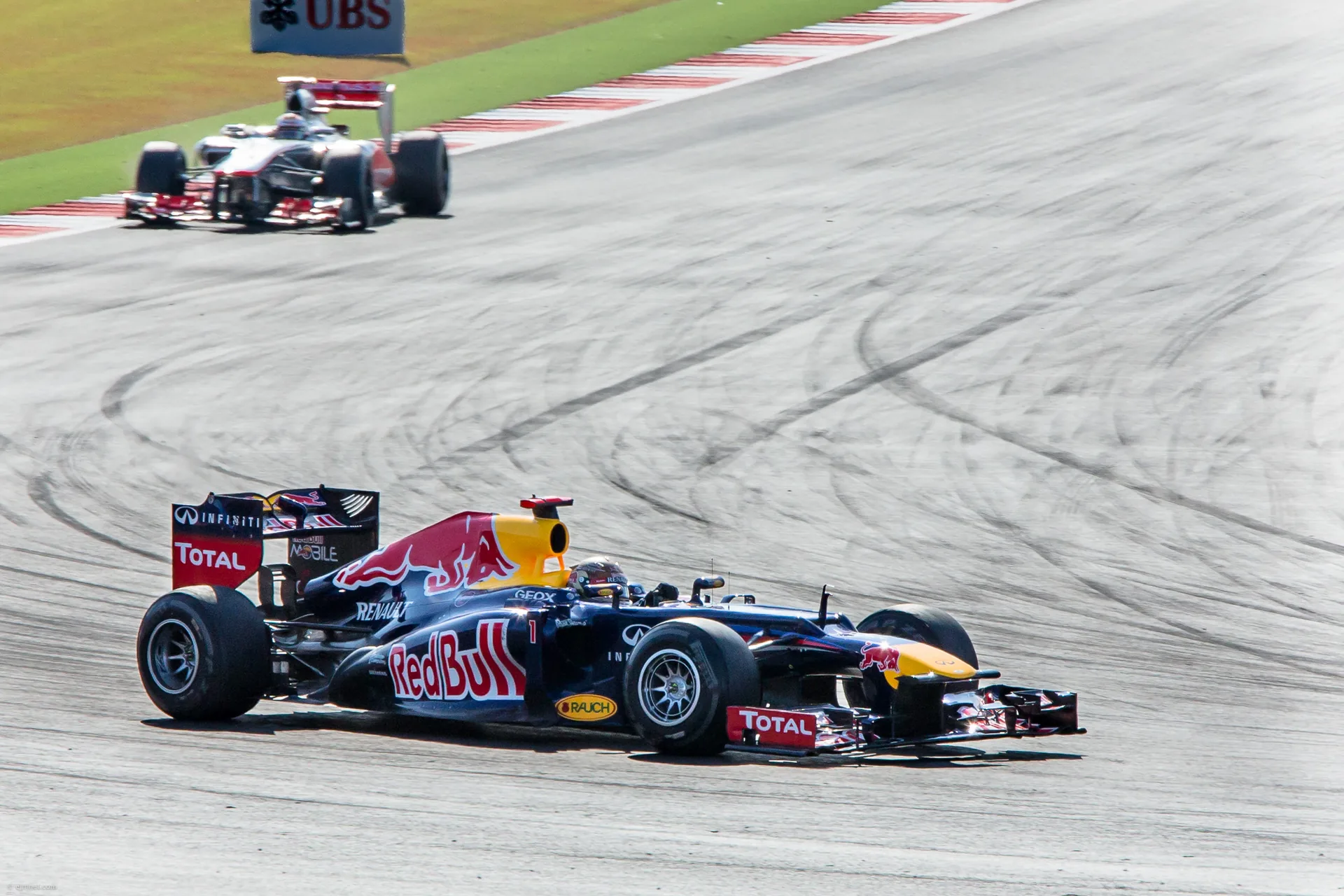
At a glance
The United States Grand Prix is a travelling story that eventually found a modern home at Austin’s Circuit of The Americas. Before the climb to COTA’s first corner, the championship race visited an airfield in Florida, a California road course, Watkins Glen, downtown Phoenix and the infield at Indianapolis.
Those six venues belong to the history of this particular Grand Prix. Other American Formula 1 events, including Long Beach, Detroit, Miami and Las Vegas, have their own identities. Keeping that distinction clear makes sense of old results and explains why an American race winner does not necessarily appear on the United States Grand Prix’s winners list. F1 lists the six US Grand Prix venues.
- World Championship beginning: Sebring, 12 December 1959; Bruce McLaren won for Cooper. Official Sebring result.
- Longest earlier home: Watkins Glen staged the race from 1961 to 1980, a run of 20 editions. IndyCar’s history of the Glen.
- Austin debut: 18 November 2012, won by Lewis Hamilton for McLaren. COTA’s own chronology.
- COTA’s Grand Prix lap: 5.513 kilometres, with a scheduled race of 56 laps. F1 circuit information.
For a British visitor, the historical reward is recognising how often this race has mattered to familiar teams and drivers. The settings change dramatically, yet Lotus, McLaren and Hamilton supply threads that run through the map. COTA is the latest chapter in that movement, rather than the beginning of American Grand Prix racing.
Origins
Sebring introduced the United States Grand Prix to the World Championship in 1959. Its former-airfield setting in Florida fitted a period in which international racing could adapt existing roads and runways to a new purpose. The championship arrived for a decisive final round, with Jack Brabham, Stirling Moss and Tony Brooks still involved in the title contest. F1’s account of the first championship race.
Brabham’s Cooper ran short of fuel near the finish, and he pushed the car across the line in fourth place. McLaren won the race, while Brabham secured the drivers’ championship. That split outcome established a useful theme for the event: the winner of an American afternoon and the driver celebrating the season’s biggest achievement might be different people. The official result preserves both outcomes without requiring the story to be reduced to one photograph. The 1959 classification.
The Grand Prix then crossed the country to Riverside in California for 1960. Moss won in a privately entered Lotus, ahead of Innes Ireland in the works team’s car. This was another temporary stop rather than a permanent solution. Moving from Florida to California in consecutive years illustrates how much the early championship was still searching for a settled American setting. Riverside’s official finishing order.
Watkins Glen provided that stability from 1961. The town already had a road-racing history, with a permanent circuit opening in 1956 after earlier races on public roads. New pits and other improvements prepared the venue for Formula 1. Its own history describes the Grand Prix becoming an autumn tradition, supported by an audience prepared to travel to the Finger Lakes region of New York. The circuit’s account of its beginnings.
That move changed the meaning of the event. After two isolated championship appearances at different locations, the US Grand Prix could develop annual habits, remembered viewing places and a recognisable season-ending atmosphere. For spectators, continuity matters almost as much as the track itself: memories accumulate when the same journey can be repeated with a changing cast of cars and rivals.
There is a separate Indianapolis footnote. The Indianapolis 500 counted towards the drivers’ championship from 1950 to 1960, but it was not the United States Grand Prix and did not use the later Formula 1 road course. The two histories meet at the same famous venue without becoming the same race. F1 explains the distinction.
How the circuit has changed
In this race’s case, a history of circuit changes begins with entire changes of location. Sebring and Riverside were followed by the wooded setting of Watkins Glen; later came a grid of city streets at Phoenix, a road course inside Indianapolis Motor Speedway and finally a dedicated modern venue outside Austin. Different places offered very different answers to the same problem of presenting Formula 1 to an American audience.
Watkins Glen underwent a major alteration for 1971. The extension added roughly a mile of track, moved the start and pits, and introduced the southern loop known as the Boot. That means a map from the early Clark-and-Hill years does not show the full course used by later Formula 1 visitors. IndyCar’s historical account is especially useful for connecting the two versions without treating every remembered Glen race as though it used identical geometry. The 1971 reconfiguration.
Phoenix, which hosted the Grand Prix from 1989 to 1991, presented the opposite visual language: temporary streets laid out around the city’s grid. Close walls and repeated right-angle changes replaced the Glen’s flowing landscape. The 1990 race became memorable for Jean Alesi’s contest with Ayrton Senna, showing how a street circuit’s reputation can be altered by the quality of the duel it produces. F1’s Phoenix history.
At Indianapolis, Formula 1 used a 13-turn, 2.605-mile course from 2000 to 2007. It ran clockwise, opposite to the oval events, combining a new infield section with the front straight, a short chute and the oval’s first turn. These details matter when watching old television pictures: the familiar grandstands and banking surround a route created specifically for the Grand Prix, not a conventional lap of the Indianapolis 500 course. The Speedway’s Formula 1 history.
COTA offered a different kind of continuity. Formula 1’s circuit guide draws comparisons between its fast direction changes and Silverstone’s Maggotts–Becketts sequence or Suzuka’s S Curves, while the slower stadium area recalls Hockenheim. The uphill first corner supplies an immediately recognisable landmark of its own. A British fan can therefore read some of the design through familiar references, then notice how the Texas terrain combines them into a new lap. F1’s description of COTA’s corners.
Our suggestion is to watch an early Glen lap, an Indianapolis lap and a modern COTA lap before the trip. Concentrate on how a driver reaches the straight, where the speed disappears under braking and which corners demand repeated changes of direction. The exercise makes the Grand Prix’s long search for a home visible in the racing itself.
Great races and moments
1959 and 1961: beginnings that belong to different teams
McLaren’s Sebring victory gave the first championship US Grand Prix a young winner and Brabham a title-clinching finish. Two years later, Ireland won the opening Watkins Glen edition and gave the works Lotus team its first World Championship race victory. That second milestone is distinct from Moss’s earlier successes in privately entered Lotus cars. It is a small qualification, but one that keeps the achievements of constructor and entrant clear. The 1961 race result; F1 on the first Glen victory.
1990: a newcomer challenges the champion
At Phoenix, Alesi’s Tyrrell fought Senna’s McLaren for the lead before Senna eventually prevailed. The race remains a compelling watch because the contest is readable: two drivers repeatedly testing how much space and traction the streets allow. A modestly regarded layout could still produce a vivid individual confrontation. It also helps explain why judging a venue from its map alone misses part of its history. F1 revisits the Phoenix duel.
2005: the six-car race
The 2005 Indianapolis Grand Prix is remembered for a failure to deliver a normal contest. All seven Michelin-equipped teams withdrew after the formation lap on tyre-related safety grounds. Only six cars raced, with Michael Schumacher winning ahead of Ferrari team mate Rubens Barrichello and Jordan’s Tiago Monteiro. The official results include the withdrawal explanation, an essential part of interpreting an otherwise extraordinary finishing order. The result and its safety note.
The lasting lesson for a spectator is that sporting history includes disappointment as well as great battles. The empty grid is central to remembering the event honestly.
2012: Hamilton opens the Austin chapter
Hamilton won COTA’s inaugural Grand Prix ahead of Sebastian Vettel and Fernando Alonso. It was also his final victory for McLaren before moving to Mercedes. The result therefore closes one team relationship at the same moment it opens a circuit’s Formula 1 history. That double significance gives the first Austin race more weight than a straightforward new-venue celebration. COTA’s account of the inaugural race; F1 on Hamilton’s McLaren farewell.
2015, 2018 and 2025: a title and changing winners
Hamilton won the 2015 race and secured his third world championship at COTA. In 2018 Kimi Räikkönen took his final Formula 1 victory here, giving Ferrari its first Austin win. These results place different forms of achievement beside each other: a dominant champion confirming his season and an established driver adding one last victory to a long career. The 2015 classification; COTA’s historical results and milestones.
By 2025 the winning name was Verstappen, with Norris second and Leclerc third. The official order gives the modern story a firm endpoint for this history. COTA has become familiar enough to have its own eras and recurring rivalries, while continuing to produce results that change the championship discussion beyond Texas. The 2025 Grand Prix result.
The British story in the United States
Moss’s Riverside victory and Ireland’s first Watkins Glen win provide two distinct British beginnings. One belongs to a private entrant making outstanding use of a Lotus; the other to the manufacturer’s own racing operation reaching a championship milestone. For a visitor interested in the cars as much as the drivers, that difference is an excellent reason to look closely at team names in old results.
At the Glen, British success quickly became a tradition. Ireland, Clark, Hill, Stewart and Hunt collectively won 11 of the 20 Formula 1 races held there, including the first eight editions from 1961 through 1968. Clark and Hill each won three times. Those figures help explain why upstate New York appears so often in the sporting memories of British fans who followed the championship during the 1960s and 1970s. IndyCar’s account of the British winners; F1’s historical winners list.
Hamilton carries the modern connection across two venues. He won at Indianapolis in 2007, ahead of McLaren team mate Alonso, then returned to the top step when the race reappeared at Austin in 2012. By the end of 2025 his US Grand Prix total remained six, with five of those wins at COTA. Keeping the Indianapolis victory in view prevents his American story from being compressed into a Texas-only statistic. The 2007 result; F1’s US Grand Prix statistics; F1’s COTA win count.
Austin also hosted the confirmation of Hamilton’s sixth world title in 2019. Valtteri Bottas won that race, while Hamilton finished second and Verstappen third. Once again, the Grand Prix winner and the championship celebration belonged to different drivers. If a title is at stake during your visit, the scoreboard deserves as much attention as the battle directly in front of your seat. F1’s report on the sixth championship.
This British thread works best as a set of connections rather than a claim of ownership over the event. The US Grand Prix has its own geography and audience. Recognising a Lotus achievement or a Hamilton celebration gives a visiting fan a way into that history while leaving room to appreciate the setting and the people who made each American chapter possible.
Records and numbers
The sporting figures below are correct to the end of the 2025 season. The US Grand Prix is counted as a named event across its venues; separate American Grands Prix are not added to the same list.
| Measure | Figure and meaning |
|---|---|
| Championship US Grand Prix venues | Six: Sebring, Riverside, Watkins Glen, Phoenix, Indianapolis and COTA. |
| Watkins Glen’s run | Twenty races, from 1961 to 1980. |
| Hamilton’s US Grand Prix victories | Six in total; five came at Austin and one at Indianapolis. |
| Indianapolis Formula 1 era | Eight races, from 2000 to 2007. |
| COTA Grand Prix lap | 5.513 kilometres; the full Sunday race is scheduled for 56 laps. |
Sources: F1’s venue list, the Glen’s championship history, IMS historical information, F1’s 2025 statistics and COTA’s F1 circuit profile.
These figures answer different questions. A driver’s total follows the event across the country, while a circuit statistic belongs to one location. That distinction is particularly useful when comparing Hamilton’s American victories with those of an earlier driver whose US Grand Prix career was concentrated at the Glen.
A timeline
- 1959: Sebring stages the first World Championship United States Grand Prix; McLaren wins and Brabham becomes champion.
- 1960: the race moves to Riverside, where Moss wins in a Lotus entered by Rob Walker.
- 1961: Watkins Glen begins its 20-race Formula 1 run with Ireland’s victory for the works Lotus team.
- 1971: the Glen introduces a major extension, including the Boot, together with new pits and a relocated start.
- 1980: the final Formula 1 US Grand Prix at Watkins Glen ends its longest earlier period at one home.
- 1989–1991: Phoenix hosts three editions on a temporary city-street circuit.
- 2000–2007: Indianapolis brings the race back to a road course built inside the Speedway; Hamilton wins the final edition.
- 2012: COTA opens the Austin era with a Hamilton victory.
- 2015 and 2019: Hamilton secures world titles at COTA, winning the first of those races and finishing second in the latter.
- 2025: Verstappen wins the US Grand Prix ahead of Norris and Leclerc.
The F1 venue chronology, Speedway history and latest result included here connect these chapters. Read the changes as shifts in the event’s setting and character: airfield, permanent road course, temporary streets, famous oval complex and purpose-built modern circuit.
See it for yourself
The United States Grand Prix visitor guide is the starting point for the Austin trip. Use the history to decide what you want to recognise at the circuit: the climb into Turn 1, the direction changes that recall classic European tracks, or the stadium section where cars become easier to follow at lower speed.
Bring a sense of scale to the ticket decision. A dramatic television view may combine several cameras and corners, while a spectator occupies one position at a time. Compare the exact sightline, the screen and the route back from your chosen section. Our grandstand or general admission guide helps turn those competing priorities into a clear choice.
For historical preparation, put a Watkins Glen map beside an Indianapolis Formula 1 map and today’s COTA plan. Trace how each course returns its cars to the main straight. The comparison reveals more than a list of venues: it shows how the same Grand Prix has asked spectators to follow the action in entirely different surroundings.
Pack using first race weekend kit, and consult F1 with children if younger fans are travelling. Keep the current event’s entry and transport instructions alongside those preparations. Historic racing film can build anticipation; a sensible plan for breaks, walking and the journey home lets your group enjoy the actual weekend.
Austin offers a chance to add your own memory to a well-travelled race. Arrive with a few stories you can place on the lap, then pay attention to the new details: how the crowd follows a developing battle and which part of the circuit makes the cars look most alive to you.
FAQs
Did the United States Grand Prix begin at COTA?
No. Its World Championship history began at Sebring in 1959, followed by Riverside, Watkins Glen, Phoenix and Indianapolis. COTA first hosted the race in 2012, opening the modern Austin chapter.
Are Long Beach and Detroit included in this US Grand Prix history?
They are part of Formula 1’s wider American history but were separate events. Long Beach staged the United States Grand Prix West, while Detroit had its own Grand Prix. They are not added to the six-venue sequence of this race.
Why does the Indianapolis 500 appear in old F1 championship tables?
The Indianapolis 500 counted towards the drivers’ championship from 1950 to 1960. It was a different event from the Formula 1 United States Grand Prix held on the Speedway’s road course between 2000 and 2007.
Who held the United States Grand Prix win record through 2025?
Lewis Hamilton had six wins in the named US Grand Prix through the end of 2025. One came at Indianapolis in 2007 and the other five at COTA, which first hosted Formula 1 in 2012.
Which guide should I use for a first Austin visit?
Use the United States Grand Prix visitor guide for the modern COTA weekend, then compare the precise ticket section with the current circuit map. The earlier venues explain the history, while Austin’s current arrangements determine your trip.
Sources
- Confirmed: Formula 1: the six United States Grand Prix venues
- Confirmed: Formula 1: the wider history of American F1 venues
- Confirmed: Formula 1: historic United States race moments
- Confirmed: Formula 1: 1959 United States Grand Prix result
- Confirmed: Formula 1: 1960 United States Grand Prix result
- Confirmed: Formula 1: 1961 United States Grand Prix result
- Confirmed: Watkins Glen International: circuit history
- Confirmed: IndyCar: open-wheel history at Watkins Glen
- Confirmed: Indianapolis Motor Speedway: Formula 1 history
- Confirmed: Formula 1: the return to Indianapolis in 2000
- Confirmed: Formula 1: the 2005 result and tyre-safety withdrawal note
- Confirmed: Formula 1: 2007 United States Grand Prix result
- Confirmed: Formula 1: COTA circuit information
- Confirmed: Circuit of The Americas: historical timeline
- Confirmed: Formula 1: 2015 United States Grand Prix result
- Confirmed: Formula 1: Hamilton’s sixth championship at Austin
- Confirmed: Formula 1: 2025 United States Grand Prix facts
- Confirmed: Formula 1: 2025 United States Grand Prix result
- Confirmed: Formula 1: COTA history and Hamilton’s five Austin wins
- Confirmed: Formula 1: historical US Grand Prix statistics and Indy 500 context