

Quick facts
- Race weekend
- 9–11 April 2027
- Venue address / postcode
- 7992 Ino-cho, Suzuka-shi, Mie 510-0295, Japan — Official venue address and access; checked October 2026
- Gates open
- 2027 gate-opening times not yet published; checked October 2026
- Main race start
- 2026 reference: Sunday race 14:00 local; 2027 Sprint-weekend clocks pending. 2026 F1 programme; checked October 2026.
- Time difference
- UK +8 hours
- From the UK
- Long-haul
- Weekend from
- £1400 Estimate, Oct 2026
- Best base
- Nagoya
Make Nagoya your race base and give Japan more than a flying weekend. The train-and-shuttle journey is part of attending Suzuka, so buy the viewing experience you want, choose a hotel near your departure station and leave room for queues on the way home. You will enjoy the racing far more after a proper arrival day than straight off an overnight flight.
The official 2027 calendar confirms Friday 9 to Sunday 11 April at Suzuka, with a Sprint weekend. Japan is eight hours ahead of the UK during British Summer Time. The three-night race core is Friday 9 to Monday 12 April; add earlier nights for jet lag and separate nights for Tokyo, Kyoto or Osaka.
Our difficulty rating is Long-haul. Getting around Japan is manageable with preparation, but Suzuka is outside the main cities and its last mile needs attention. Arrive in Japan by Wednesday if possible, travel to your race base on Thursday and aim to leave the region on Monday rather than tying Sunday’s station queue to a flight.
Plan your weekend
Official links
Why go
Our verdict
Our opinion · how the 1–5 scores workSuzuka rewards people who love watching a racing car change direction. The linked corners and committed driving make the live view feel different from television, while the fan culture supplies its own entertainment: team colours, carefully made signs and imaginative headwear. Leave time to walk around the public areas rather than making every day a dash between train and seat.
This is also an excellent reason to build a first Japan holiday. Race from a practical Nagoya base, then change pace in Kyoto or Tokyo. Put the complicated travel before or after the racing rather than changing hotels every night during it. A stable room, a familiar station entrance and a simple breakfast routine are valuable when thousands of other supporters are making the same journey.
Choose another race if the main objective is an easy late start followed by a short walk to the track. Suzuka is a full-day commitment. Choose it enthusiastically if the circuit itself matters and you can turn the long flight into a wider trip. Spend first on the seat and a useful hotel location; luxury transfers are an optional upgrade.


Read the history
Discover the origins and defining moments behind Japanese Grand Prix.
Read Japanese Grand Prix history ↗Dates & tickets
2027 tickets — 15 November 2026 at 11:00 JST.
Suzuka’s 2027 tickets go on sale on 15 November 2026 at 11:00 Japan time. The organiser’s price catalogue lists West Area admission at¥22,000, G seats from¥24,000, D seats from¥36,400, A1 from¥75,600 and V1 from¥112,000, including tax (checked October 2026). Thursday-only tickets are advertised from¥6,800, with details still to follow.
For the West Area ticket, adult means 24 and older; U23 (high-school student to 23) is¥11,000, elementary/middle-school children¥6,000, and ages 3 to preschool¥4,200, all tax-inclusive (checked October 2026). Use the product’s category rather than assuming every stand has the same junior rule.
Official ticket formats include e-tickets, approved prints from e-tickets and Seven-Eleven issue. MobilityStation’s official sales and resale guide explains eligible electronic-ticket resale and upgrades; Seven-Eleven-issued tickets cannot use those functions. Some countries cannot buy through MobilityStation, in which case Suzuka directs buyers to the official F1 store. Read the organiser’s full ticket conditions before buying (checked October 2026).
Prioritise a three-day ticket for a first visit. The Sprint means Friday carries competitive importance, so a late arrival can cost more than practice time. Check the exact dates, seat block, refund conditions and delivery method before paying. Treat unusually cheap resale offers carefully and use the organiser’s named sales channels.
Buy only from the organiser, F1’s official ticket store or its listed agents — unofficial sellers may sell invalid tickets.
Hospitality & upgrades
2027 hospitality — published VIP Suite Premium and other organiser premium choices; prices checked October 2026.
VIP Suite Premium is a published 2027 product, rather than just a waitlist. The 4F three-day ticket is¥650,000 and 5F¥850,000, including tax, for junior-high-school age and older. Breakfast, premium lunch and drinks are included Friday–Sunday, with tea time Saturday/Sunday and an official programme. Entry uses an e-ticket exchanged for the venue pass. A limited P3 parking add-on is¥35,000 per vehicle. Official VIP Suite Premium purchase page (checked October 2026).
F1 Paddock Club, Ferris Wheel Lounge and Champions Club also appear in the organiser’s premium ticket catalogue. Compare the actual product inclusions before adding a separate grandstand ticket.
Getting there from the UK
2027 travel planning — established flight gateways and airport-rail references checked October 2026; use dated services for the journey.
For a direct UK flight, British Airways’ Japan route page is the booking source; use Tokyo as a gateway and continue by rail, or connect into Chubu Centrair International Airport for Nagoya. Do not add airport travel to the race-day train at the last minute: arrive in Japan before the first track day. Checked October 2026.
Direct UK gateway: British Airways gives London Heathrow–Tokyo Haneda at approximately 13 hours 40 minutes. That arrives in Tokyo, not Nagoya: allow for the onward rail journey and jet lag. Official route information (checked October 2026).
Connecting into Nagoya: Chubu Centrair International Airport’s station connects directly to Access Plaza. The airport gives the fastest μ-SKY journey to Nagoya as 28 minutes; a μticket supplement is required in addition to the ordinary rail fare. Official route information (checked October 2026).
For a full British citizen passport, short tourist visits ordinarily need no advance visa. Japan’s Ministry of Foreign Affairs visa-exemption list includes the UK, with initial landing permission normally up to 90 days. GOV.UK’s Japan entry requirements say your passport must remain valid throughout the stay and have a blank page. Check both before booking, particularly if your passport category or purpose differs.
Set up the official Visit Japan Web arrival service before departure to prepare immigration and customs information. Keep the resulting details accessible on your phone alongside your accommodation address, and carry a separate copy of essential travel documents. Use the government service directly rather than a paid imitation.
London Heathrow is the straightforward starting point for a nonstop Tokyo flight. British Airways quotes approximately 13 hours 50 minutes from London to Tokyo. Allow additional time for immigration and onward rail to Nagoya; landing in Tokyo does not put you at Suzuka. Compare a protected connecting itinerary into Nagoya or Osaka against a Heathrow flight plus domestic rail.
From Manchester, Birmingham, Bristol, Edinburgh, Glasgow and Newcastle, compare one-ticket connections through a European or other airline hub with a UK connection to Heathrow. Use the actual arrival airport, baggage allowance and total elapsed time in the comparison. A cheap flight arriving late can create another hotel night or an awkward first train, and separately booked flights leave less room when something runs late.
For race days, follow the circuit’s official access guidance: Kintetsu to Shiroko followed by the circuit shuttle is the sensible starting plan from Nagoya. The organiser lists a no-reservation Shiroko shuttle. Buy any limited-express seat supplement as well as the underlying rail fare, and use Kintetsu’s route search for your chosen departure.
Avoid choosing Suzuka Circuit Ino simply because its name looks convenient. The organiser warns that boarding waits there can exceed three hours and recommends other stations. Keep Sunday evening free of a tight connection. Eat something, use the toilets and agree a meeting point before joining the return flow; carry enough battery and cash to change plan without rushing.
Before you go — UK travellers
British citizen passport holders — checked October 2026. A British visitor’s passport must cover the stay and have a blank page. Short tourist visits are visa-exempt for up to 90 days under Japan’s official exemption list. GOV.UK entry rules · Official entry information
Carry yen cash as well as a card; UK-issued cards do not work everywhere. Japan uses 100 V flat-pin sockets: check the voltage printed on your charger before using an adapter. Police: 110; fire/ambulance: 119. Japanese basics: “sumimasen” (excuse me), “arigatō” (thank you), “eki wa doko desu ka?” (where is the station?). JNTO plugs · JNTO emergencies (checked October 2026).
Buy travel insurance covering medical care and repatriation; GHIC does not replace insurance here. Check your mobile provider’s roaming charges before enabling data and compare an eSIM if your handset supports one. Keep travel documents and ticket QR codes available offline. Use our full Brits-abroad checklist.
TravelHealthPro country health advice covers vaccination and health preparation; discuss your itinerary and medicines with a health professional before departure. Carry your original passport. Check prescription and over-the-counter medicines with the Japanese Embassy before packing: some ordinary UK cold and allergy products, and codeine-containing medicines, are prohibited. Read the GOV.UK medicines advice. GOV.UK emergency contacts · GOV.UK local laws and safety. Checked October 2026.
The currency is Japanese yen (JPY). Tipping is not customary; pay the bill rather than leaving loose cash on the table. JNTO money guide · JNTO tipping guide. Your UK roaming allowance may not apply; compare a prepaid data SIM/eSIM and keep a charged battery pack for tickets and navigation. Checked October 2026.
Where to stay
Where to stay — 2027 details marked pending are not yet published; 2026 references are labelled. Checked October 2026.
Affiliate note: we may earn a commission from qualifying accommodation bookings, at no extra cost to you. How our links work. Accommodation searches open on Booking.com in a new tab. Check the dates and party size before booking.
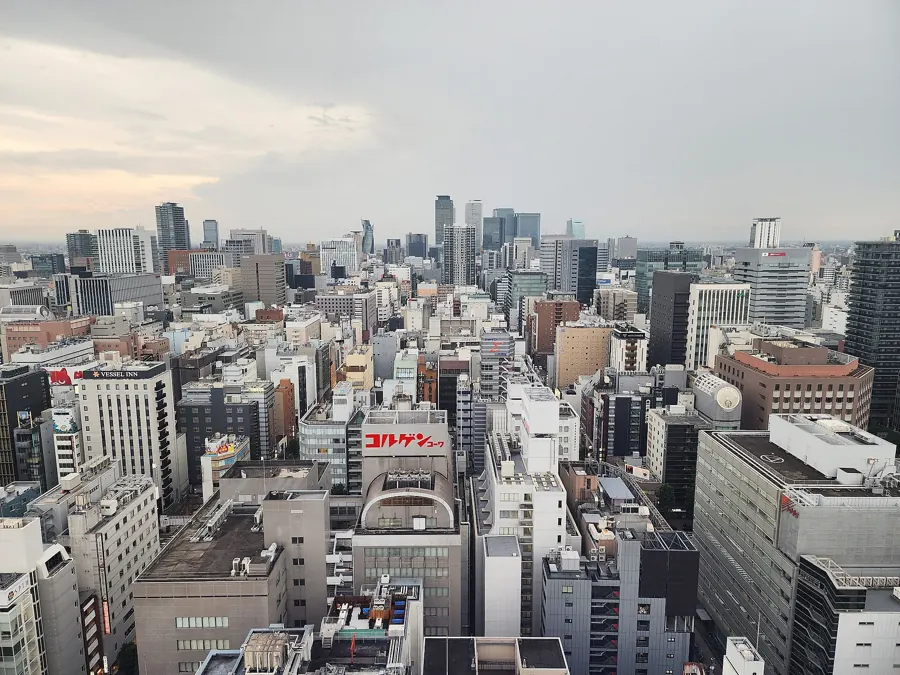 Photo: LMP 2001 / Wikimedia Commons, CC BY-SA 4.0

Nagoya
Nagoya is the simplest big-city starting point for Suzuka, with Kintetsu departures and plenty to do after racing. Stay convenient for the railway rather than buying a distant room solely on price.
To the circuit: Nagoya → Japanese Grand Prix: Nagoya–Shiroko express train: about 50 minutes in F1’s estimate, then the circuit shuttle and queue. Checked October 2026. Official transport information.
Search Nagoya stays · 9–12 April 2027 ↗ Photo: Benlisquare / Wikimedia Commons, CC BY-SA 4.0

Osaka
Osaka adds a stronger food-and-nightlife holiday to the trip. It also adds rail time, so it suits visitors prepared for an early start and a late return.
To the circuit: Osaka → Japanese Grand Prix: Kintetsu to Shiroko then shuttle; exact 2027 journey depends on train. Official transport information.
Search Osaka stays · 9–12 April 2027 ↗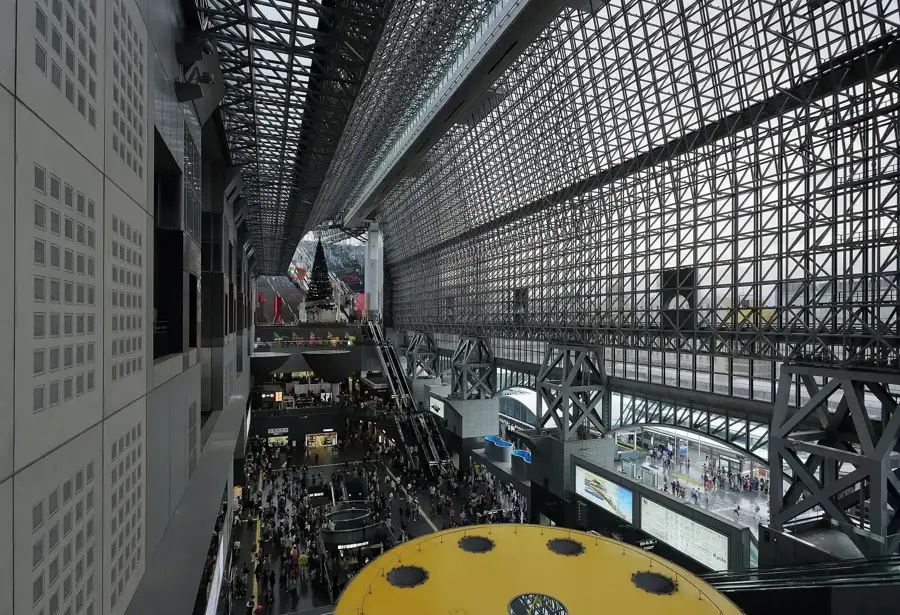 Photo: Martin Falbisoner / Wikimedia Commons, CC BY-SA 4.0

Kyoto
Kyoto gives the non-fan temples, traditional streets and a completely different side of Japan. Treat the race as a long excursion: Suzuka lists routes via Nagoya or Yamato-Yagi rather than a direct circuit train.
To the circuit: Kyoto → Japanese Grand Prix: Train via Nagoya or Yamato-Yagi to Shiroko, then shuttle; official total pending. Official transport information.
Search Kyoto stays · 9–12 April 2027 ↗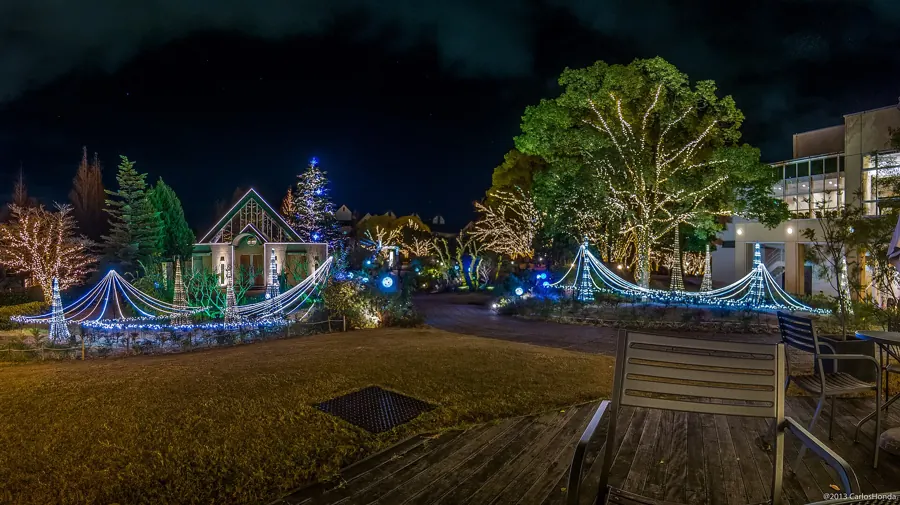 Photo: carloshonda / Wikimedia Commons, CC BY 3.0

Suzuka
Suzuka town puts you closer to the event but has less choice than Nagoya. Check the station and walking route for the specific property; a Suzuka address is not the same as a room by Main Gate.
To the circuit: Suzuka → Japanese Grand Prix: Shiroko shuttle or mapped walking route; hotel-specific time pending. Official transport information.
Search Suzuka stays · 9–12 April 2027 ↗Nagoya is the best default for a first visit. Search around Nagoya Station if the priority is a straightforward start, then check the walking route to the Kintetsu entrance rather than relying on distance to the station complex as a whole. A slightly ordinary room with an easy station walk is more useful than a prettier room requiring another crowded transfer.
Osaka works well as a holiday base but makes the race-day commute longer. Consider it when the rest of your trip is centred on Kansai and you are happy with early starts. Kyoto is strongest as the sightseeing portion before or after the race; shifting to Nagoya for the racing saves energy and gives the non-fan a clear choice of where to spend each day.
Suzuka town can remove part of the rail journey, but limited local supply and the exact hotel-to-gate route matter. Do not pay a premium for a Suzuka address until you have traced the whole journey. Check whether dinner is available near the property after you return and whether luggage can be stored on Monday.
Search dates: 2027-04-09 to 2027-04-12 (three nights, two adults sharing). Arriving Thursday adds a fourth night; change the dates before booking. Match the hotel’s walk to your station or pickup point before reserving.
For easy meals, start with station restaurants and food halls in Nagoya rather than booking a distant dinner immediately after racing. Eat a substantial breakfast and carry a permitted snack for the trip. Keep one evening flexible for a local meal: a relaxed bowl of noodles beats spending the final energy of the day finding a restaurant across town.
Where to stay: prices and timings checked October 2026. Unattributed travel durations are planning estimates; published event arrangements retain their stated year.
Getting to the circuit on race day
Getting to the circuit on race day — 2027 details marked pending are not yet published; 2026 references are labelled. Checked October 2026.
2027 arrangements checked October 2026
| Base | Mode and departure | Fare | Frequency | Journey | Official source |
|---|---|---|---|---|---|
| Nagoya | Kintetsu train to Shiroko, then shuttle | Train and bus fares depend on purchased service; no 2027 event fare confirmed | Shuttle requires no reservation; interval pending | Approx 50 min train to Shiroko; add bus and queue | Official F1 train estimate |
| Osaka | Kintetsu to Shiroko, then shuttle/walk | Operator route fare | Train-specific departures | Official end-to-end duration pending | Suzuka western access |
| Kyoto | Shinkansen via Nagoya or Kintetsu via Yamato-Yagi to Shiroko | Operator route fare | Train-specific departures | Official end-to-end duration pending | Suzuka Kyoto routes |
| Suzuka | Shiroko station shuttle or published station walking route | Bus fare unconfirmed | No reservation required | Individualhotel–gate duration pending | Official access |
Published 2027 parking: P7 three-day parking is¥18,000, but cars cannot leave 15:00–19:00 each race day. P10 three-day parking is¥21,000; Suzuka University and KKC Kenko Square are¥15,000 for Saturday/Sunday. P3 is restricted to eligible premium-ticket purchases. Electronic parking tickets are scanned on first arrival and exchanged for a mirror-hanging pass. Official parking purchase list and conditions (checked October 2026).
Bookable Friday alternative, 9 April 2027: the reserved Shiroko direct coach is ¥2,500 return. It leaves the station’s east-exit statue meeting point at 07:30,08:00,08:30,09:00,09:30,10:00 or 10:30, with returns from Suzuka at 17:30 or 19:30. Reservations open 16 November 2026 at 10:00 and close 24 March 2027 at 23:59; admission is separate. Official Friday reserved coach (all times Japan local; checked October 2026).
Shiroko shuttle: the current 2027 circuit access page confirms a shuttle without reservations. Ordinary access guidance puts Mie Kotsu buses at Shiroko’s west exit and quotes about 20 minutes in normal traffic; Grand Prix queues add time. This is separate from the ¥2,500 reserved coach offered only on Friday 9 April 2027 from the east exit. 2027 race access · Ordinary station/bus access. Checked October 2026.
True cost of the weekend
Two adults share one room for three nights, Friday–Monday. For Japanese Grand Prix, admission covers three race days; spend more for better seating, a more convenient bed and longer meals.
Travel covers return UK economy flights and UK airport journeys. Circuit transport includes local airport transfers, race-day rail and shuttle allowances. Stay covers three nights per adult sharing a room, including a tax and mandatory-charge allowance; food includes tax. No routine tipping allowance is added for Japan. Extra arrival nights, Shinkansen touring and the wider holiday are separate.
| Cost | Budget | Mid-range | Splurge |
|---|---|---|---|
| Tickets | £130 | £520 | £1,100 |
| Return UK travel | £850 | £1,100 | £1,700 |
| 3 nights’ stay | £210 | £390 | £810 |
| Circuit transport | £100 | £160 | £350 |
| Food & drink | £110 | £180 | £300 |
| Total | £1,400 | £2,350 | £4,260 |
Estimates per adult, checked October 2026. Use them to plan, then swap in your real prices.
Budget means a lower-cost viewing area, a simple shared room and mostly rail travel. Mid-range puts more money into a reserved seat and a comfortable Nagoya hotel. Splurge buys a stronger seat category and more room and transfer flexibility; it still assumes economy flights, so premium-cabin travel is a separate upgrade.
Keep the three-night race core separate from the wider holiday. Add Tokyo–Nagoya or Kansai rail journeys if they are outside your flight-and-transfer plan, plus any pre-race arrival nights. Compare final hotel totals including taxes and mandatory charges. You can trim restaurant spending with breakfast and station meals without making the rail commute harder.
Japan does not require an American-style tipping budget: JNTO’s guidance says tipping is not customary in ordinary restaurants, taxis and hotels. Pay the stated bill and budget for the things you will actually use. Keep cash for smaller purchases, while taking a card that works overseas and checking its foreign-exchange charges.
Grandstands & general admission
For a first visit, shortlist B2 for the opening corners, Q2 for the chicane or V2 for the main-straight occasion. Decide which part of the lap interests you before comparing prices. An expensive seat on a straight and a cheaper corner seat deliver different pleasures; the right purchase follows your preferred view rather than a simple ranking by cost.
The official B2 page shows its Turn 2 position and block-specific views. It describes a downhill walk from GP Square and an uphill return, with access via the Turn 1 gate. B2 is a sensible first shortlist for watching the opening-corner sequence; compare the actual block images to judge fencing and the angle towards Turn 1.
Q2 places you at the chicane in an individual seat with a backrest. It suits fans interested in braking and late-lap action. The circuit notes stairs up into the stand and proximity to the chicane gate. That helps with leaving the stand, but the onward shuttle and station crowd still control the journey home.
V2 is the upper main grandstand: choose it for the start, pits and finish atmosphere, using the detailed seat views to judge the pit-lane angle. The organiser explicitly identifies outlet seats with obstructions. Read those warnings closely rather than treating every seat carrying the same stand name as equivalent.
The West Area is the economical way to prioritise being at Suzuka. Be ready to walk, arrive early for your preferred spot and carry waterproofs rather than counting on cover. For any stand, inspect the current map for the nearest big screen and choose rain and sun protection independently of the seat name. Comfortable walking shoes matter as much as the merchandise.
Check before you book: inspect your exact block’s screen position, shelter and gate route on the organiser’s current map and seat images.
At the circuit
Use the official venue map to locate the racing course, park, restaurants, shops and hotel areas. Save the final F1 event map offline when published and choose your ticketed gate before travelling. Checked October 2026.
The 2027 wheelchair-ticket page offers V1, V2, B1 and R locations. Only V2 and B1 have roofs; V2 has a dedicated lift. Companions need paid spectator tickets, and these spaces cannot use seat changes or resale. R wheelchair admission is¥58,000 adult 24+, with other age categories on the product page (checked October 2026).
2027 viewing rules, checked October 2026: Suzuka’s spectator notes prohibit tents, parasols, scooters and pets other than assistance dogs. Cameras measuring 26 cm or more overall cannot be used in ordinary spectator seats; avoid selfie sticks and use a poncho in crowded areas. The venue-wide services FAQ permits your own food and water bottle, with picnics away from restaurant seating. Use the general venue map for permanent facilities, and confirm the 2027 F1 toilets, drinking-water points and individual vendor payment methods when the event facilities plan is published.
Race weekend day by day
2026 —2027 details not yet published. Local 2026 F1 session times were Friday 11:30/15:00 practice, Saturday 11:30 practice/15:00 qualifying, Sunday 14:00 race. Converted from F1’s UTC schedule; checked October 2026.2027 is a Sprint, so do not copy those sessions into an itinerary for April 2027. Official 2026 programme
Thursday: settle into Nagoya and rehearse the station route. Locate the correct Kintetsu entrance, sort payment and collect any rail bookings. Buy breakfast supplies and check the next morning’s departures before dinner. If you add a circuit visit, make sure your ticket covers it; do not turn an arrival day into a race against another deadline.
Friday: travel early enough to learn the shuttle and gate system without missing the first session you care about. Find your seat, the closest toilets and the return-bus area while you still have spare time. On a Sprint weekend the competitive programme begins earlier in the weekend than a conventional practice-only Friday.
Saturday: keep the same reliable route and bring food and drink within the event rules. Give yourself a deliberate break away from the busiest concourse. Check Sunday’s rail reservations and decide whether your group will stay together or meet back in Nagoya if the return queue separates you.
Sunday: eat before the main race, charge the phone and identify the correct exit for your transport. Leave a generous evening buffer. If you remain for the atmosphere, make it a conscious choice with enough food and an appropriate return service, rather than discovering a missed connection after joining the queue.
Monday: travel onward or begin the flight home. For a wider holiday, send the group to its next base after breakfast rather than adding a very early train after three full circuit days. Keep passports and flight essentials in hand luggage if using a luggage-forwarding service elsewhere in the trip.
Getting back after the race
Suzuka strongly recommends alternatives to Suzuka Circuit Ino station: its 2027 access page warns of boarding waits exceeding three hours there. Shiroko is the recommended train-and-shuttle route. Reserve the long-distance part of your return where available, but leave time for the circuit shuttle queue and do not book an airport departure immediately after the finish. Official access warning (checked October 2026).
If you buy the Friday reserved Shiroko coach, choose your 17:30 or 19:30 return when booking and be at the designated circuit parking-lot stop in time. This is a specific Friday service, not the last departure of every shuttle or train. Reserved-coach return times (checked October 2026).
Sunday rail reference, not a 2027 race timetable: Kintetsu’s Saturday/Sunday timetable effective 14 March 2026 shows the last direct Shiroko→Kintetsu Nagoya express at 22:58 (arrives 23:45) and last limited express at 23:09 (arrives 23:49; additional limited-express ticket needed). The later 23:10 local terminates at Tomiyoshi, so do not treat it as a direct Nagoya train. Allow for bus queues before reaching Shiroko and check the actual Sunday timetable again when 2027 race services are released. Kintetsu’s dated Shiroko weekend departures. Checked October 2026.
Before and after the race
- Nagoya Castle — begin the non-racing day with the city’s major historic landmark.
- Atsuta Jingu Shrine — a contrasting cultural visit in southern Nagoya.
- Osu Kannon and Osu shopping district — combine a temple stop with covered shopping streets.
- FUJI Nagoya Science Museum — an indoor option for a wet day.
- Arimatsu — the traditional tie-dyeing district for a slower outing.
- Toyota — use its official tourism guide to build a separate regional day trip.
For a named dinner stop, Yamamotoya Sohonke in Sakae serves the city’s miso nikomi udon. Sakae is the useful dining-and-evening district after the train returns; keep the next day’s early departure in mind before making it a late one. Official Nagoya city guide (checked October 2026).
Nagoya gives the non-fan a proper city day without following the circuit commute. Choose one main attraction and a food stop, then leave time to explore at an ordinary pace. Agree dinner near the station or hotel, since the returning fans may be later than expected. A flexible rendezvous works better than a prepaid evening timed to the podium.
Kyoto and Osaka are excellent additions, but they are most satisfying with their own nights. Give temples, neighbourhood walks and food districts breathing space. If the non-fan stays in Kansai while the fans move to Nagoya, compare the extra hotel cost against the benefit of everyone enjoying a trip shaped around their interests.
April puts the race near cherry-blossom season, but build a Japan holiday that remains enjoyable whatever the trees do. JNTO’s April guide describes later blooms farther north and in higher regions. Nagoya’s peak can come before the race; follow the 2027 forecast when published rather than booking a particular park on a promise of full bloom.
For Tokyo, reserve actual travel time and a separate hotel. Use the railway operator’s fare tools to compare individual Shinkansen tickets with any pass based on your itinerary. A pass earns its place through the journeys you will take, and Kintetsu access to Suzuka needs its own consideration. Avoid buying a nationwide product simply because the race is in Japan.
For a specific Nagoya option, the Toyota Commemorative Museum of Industry and Technology explores industrial history in the group’s original factory setting. It can suit someone interested in design and manufacturing even if racing leaves them cold. Check its calendar and demonstrations, then leave time for lunch rather than combining it with another distant attraction.
First-timers & families
Pack children’s ear defenders before anything decorative. Choose seats where everyone can sit comfortably, keep the timetable realistic and plan a quiet break before the group becomes exhausted. The combination of jet lag, early trains and a noisy full day can be more demanding than the racing itself.
Suzuka’s amusement-park setting and ferris wheel add family interest, but treat rides as a separate activity with their own operating and ticket conditions. Check the race ticket’s park access rather than assuming every ride is included. Agree a meeting point that can be described clearly and photograph the children’s clothing at the start of the day.
Carry a light waterproof layer, comfortable shoes, a portable charger and enough cash for small purchases. An IC transport card is useful for compatible local travel, but it does not replace a limited-express reservation or automatically pay for every event shuttle. JNTO explains interoperable IC cards; keep the balance topped up before the busiest station period.
A hotel is the simplest starting point for a first long-haul race trip. Camping adds equipment, baggage and another layer of arrangements just when the rail plan already needs attention. If camping appeals, price the whole setup and confirm the official campsite terms before sacrificing a convenient base.
Check before you book: read the 2027 bag, food, bottle, child-ticket and pushchair rules for your chosen ticket and gate.
Accessibility
Start with the journey from hotel door to the viewing position. Ask the hotel about its entrance, room layout and the step-free route to the station, then contact the railway and organiser about assistance. A suitable mainline train is only one link: the shuttle boarding point, gate surface and final stand access need to work too.
The organiser lists a dedicated wheelchair ticket on its official ticket page. Ask which viewing area is available, how companions are handled and where accessible toilets and drop-offs sit relative to it. Avoid purchasing an ordinary stand solely from a photograph; Q2, for example, explicitly involves stairs.
Allow additional time without turning every day into a test of endurance. Agree where the group can rest and how to get back early if needed. Book assistance and obtain the essential arrangements in writing, including what happens during heavy rain or a transport change. The most useful hotel is the one that supports that actual route.
Check before you book: confirm the 2027 accessible viewing allocation, companion arrangements and a workable step-free last mile directly with the organiser.
FAQs
Is Nagoya better than Osaka for the race?
Nagoya is the simplest first shortlist because it keeps the race commute more manageable. Osaka works particularly well before or after the weekend, or when your itinerary already centres on Kansai and you accept longer circuit days.
Should I use Suzuka Circuit Ino station?
Follow the circuit’s recommendation to use alternatives. Its access page warns of boarding waits over three hours at Ino. Start by planning Kintetsu to Shiroko and the circuit shuttle, then check the final event instructions.
Do British visitors need to apply for a tourist visa?
Ordinary short tourist travel on a full British citizen passport normally falls under Japan’s visa-exemption arrangements, with initial permission up to 90 days. Check MOFA and GOV.UK for your passport and circumstances before booking.
Will there be cherry blossom during the Grand Prix?
There may be blossom somewhere on a wider itinerary, but Nagoya’s peak varies and can precede the race. Use the published 2027 forecast and choose destinations for more than their trees.
Can I fly home on Sunday?
A Monday departure is a much calmer choice. Suzuka’s return queues, the distance to an airport and long-haul check-in make a tightly timed Sunday flight an unnecessary pressure on the race day.
Plan the rest of your trip
Use Which Grand Prix should I go to? to compare the full weekend rather than the ticket alone, then return to the 2027 F1 calendar for the dates. Keep the race budget and wider Japan holiday in separate columns so an extra Tokyo night is a deliberate choice.
For another Asian city-break approach, read Singapore’s night-race guide. Compare it with Baku for a city-centre circuit or Qatar for a Doha base and December racing. Each solves the last mile differently.
Heading west instead? The Mexico City guide pairs racing with a major capital, while São Paulo puts the Interlagos crowd at the centre of the trip. Choose the holiday you want around the race, then buy the transport and accommodation that make it comfortable.
More help for Japanese Grand Prix: Compare grandstands with general admission, Understand the Sprint weekend, Compare full Budget totals.